

المدونة : كيف تعمل الواح الطاقة الشمسية
What Is the 33% Rule in Solar Panels? A Complete Guide for Homeowners

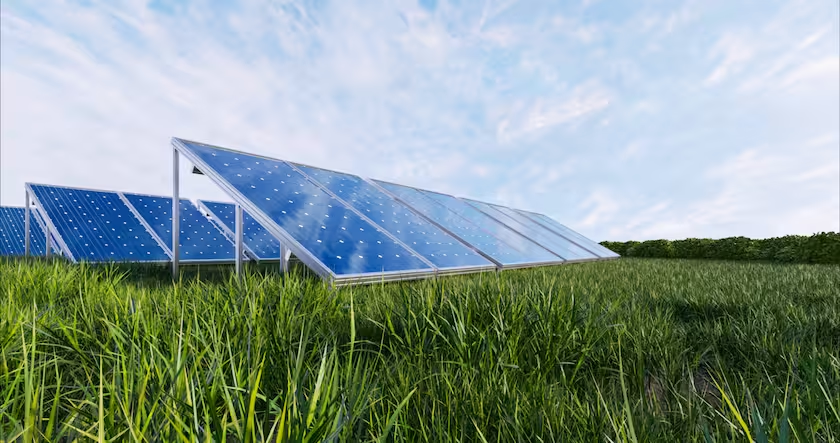
If you’ve been researching residential solar systems, you may have come across the term “What is the 33% rule in solar panels?” Although it is frequently mentioned in solar discussions, many homeowners are surprised to discover that the rule does not have a single universal definition. Instead, it is commonly used in two different contexts: inverter sizing and preliminary roof planning.
Understanding What is the 33% rule in solar panels? is important because it can influence the design, efficiency, and overall cost of a solar energy system. Rather than being an official international requirement, it serves as a practical guideline used by many solar engineers to optimize system performance under real-world operating conditions.0
Table of Contents
What Is the 33% Rule in Solar Panels?
The 33% rule is generally a design guideline used in residential photovoltaic (PV) systems rather than a strict engineering requirement.
Most commonly, it refers to allowing the total DC capacity of solar panels to be up to 33% larger than the AC output rating of the inverter.
For example:
- 5 kW inverter → up to about 6.6 kW of solar panels.
- 8 kW inverter → up to about 10.6 kW of panels.
This practice is known as DC oversizing.
The reason is simple: solar panels rarely operate at their maximum rated output throughout the day due to factors such as:
- High temperatures.
- Dust accumulation.
- Cloud cover.
- Seasonal changes.
- Panel aging.
- Roof orientation.
Adding extra panel capacity helps the inverter operate closer to its maximum output for longer periods, increasing annual energy production.
read more:How Solar Energy System Starts
How Do You Measure Your Roof Area Using the 33% Rule?
Some installers also use the term 33% rule as a rough planning method when estimating whether a roof has sufficient usable space for solar panels.
This interpretation is not an engineering standard but rather an early planning guideline.
During the assessment, installers typically evaluate:
- Available roof surface.
- Chimneys and ventilation openings.
- Water tanks.
- Skylights.
- Areas affected by shading.
- Maintenance access pathways.
Only the remaining usable roof area is considered suitable for solar panel installation.
A professional site survey is always more accurate than relying on a general percentage.
read more: Is Solar Power AC or DC
How Can the 33% Rule Be Interpreted in Two Different Ways?
One reason homeowners become confused is that the phrase “33% rule” is used in different situations.
Interpretation 1: Inverter Oversizing
This is the most common meaning.
The total solar panel capacity may exceed the inverter’s rated AC capacity by approximately one-third.
This helps improve annual energy generation because solar panels seldom reach their nameplate output.
Interpretation 2: Roof Planning
Some solar companies use the term when estimating usable roof space during the initial consultation.
It serves only as a planning estimate and should never replace a detailed engineering assessment.
Because these two interpretations serve different purposes, it’s important to understand the context whenever the term is used.
read more:What Are the 5 Types of Solar Energy
Why 33% Rule in Solar Panels Exists – Safety, Code & Roof Planning
The guideline was developed to improve overall system performance while maintaining safe operation.
It helps engineers balance three important objectives:
Maximizing Energy Production
Extra panel capacity allows the inverter to operate near its rated output for longer periods throughout the day.
Reducing Seasonal Performance Losses
Solar panels naturally produce less electricity during winter, cloudy weather, or dusty conditions.
Oversizing helps compensate for these reductions.
Improving Return on Investment
Since solar panels have become significantly more affordable, adding several extra panels often delivers greater lifetime energy production than purchasing a much larger inverter.
Supporting Practical Roof Design
For roof planning, installers must also leave sufficient space for:
- Safe maintenance access.
- Fire safety pathways.
- Future servicing.
- Proper ventilation around equipment.
These practical considerations influence the final layout more than simple mathematical percentages.
How Does Inverter Oversizing Affect Solar Home Performance?
Many homeowners worry that installing more solar panels than the inverter rating might damage the system.
In reality, when designed correctly, moderate oversizing is both safe and widely accepted by inverter manufacturers.
Some important benefits include:
- Higher annual electricity production.
- Better morning and afternoon performance.
- Improved winter energy generation.
- Faster return on investment.
- Better utilization of inverter capacity.
During periods of extremely strong sunlight, the inverter may temporarily limit power output-a process known as power clipping. However, the small amount of clipped energy is usually outweighed by the increased production achieved during the rest of the year.
How Is the 33% Rule Applied in Residential PV Systems?
In residential photovoltaic (PV) installations, the 33% rule is applied during the system design stage to determine the optimal balance between the total capacity of the solar panels (DC) and the inverter output (AC).
Instead of matching both capacities exactly, solar designers often install a solar array that is up to 33% larger than the inverter’s rated output. This approach helps the inverter operate closer to its maximum efficiency throughout the day, especially during periods when solar panels are producing less than their peak capacity.
For example:
| Inverter Size | Recommended Solar Panel Capacity |
| 3 kW | Up to 4 kW |
| 5 kW | Up to 6.6 kW |
| 8 kW | Up to 10.6 kW |
| 10 kW | Up to 13.3 kW |
The exact ratio depends on factors such as the inverter manufacturer’s recommendations, local regulations, roof orientation, and climate conditions.
How Does System Sizing Impact Solar Energy System Design?
Proper system sizing is one of the most important factors affecting the performance and financial return of a solar installation.
Oversizing or undersizing the system without proper engineering can reduce efficiency and delay the payback period.
Professional solar designers evaluate several factors before determining the appropriate system size, including:
Household Electricity Consumption
Your monthly electricity usage is the starting point for determining the required solar capacity.
Available Roof Space
The usable roof area limits how many panels can be installed while maintaining proper spacing and safe access.
Sunlight Conditions
Solar production varies depending on geographical location, seasonal changes, and shading throughout the day.
Future Energy Needs
Many homeowners plan to add electric vehicles, swimming pool pumps, or additional air-conditioning units in the future.
Designing the system with future expansion in mind can save significant upgrade costs later.
How Do Portable Power Stations Work with Solar Panels?
Portable power stations use the same basic principle as residential solar systems but on a much smaller scale.
Solar panels charge an internal battery through a charge controller, allowing stored energy to be used later for powering appliances or electronic devices.
Unlike rooftop solar systems, portable power stations:
- Store electricity internally.
- Operate independently of the utility grid.
- Are designed for temporary or mobile applications.
- Typically do not involve inverter oversizing using the 33% rule.
For this reason, the 33% rule is generally associated with permanent residential PV installations rather than portable solar products.
How Does the System Perform With and Without the 33% Rule Constraints?
The difference between following and not following the 33% rule becomes more apparent over the long term.
System Designed Using the 33% Rule
Benefits include:
- Higher annual energy production.
- Better inverter utilization.
- Improved morning and afternoon generation.
- Stronger winter performance.
- Faster return on investment.
The inverter operates efficiently for more hours each day, increasing overall energy yield.
System Without Oversizing
If the panel capacity matches the inverter exactly:
- Initial equipment costs may be slightly lower.
- The inverter experiences less power clipping.
- Peak performance may be achieved under ideal conditions.
However, the system may generate less electricity over the course of a year because the inverter reaches its rated output less frequently during normal operating conditions.
For many residential projects, carefully designed oversizing offers better long-term value than sizing the panels and inverter equally.
Are There Any Exceptions or Special Cases to Consider?
Yes. While the 33% rule is widely accepted in many residential solar projects, there are situations where different design approaches are more appropriate.
Examples include:
Utility Regulations
Some utility companies limit the maximum DC-to-AC ratio for grid-connected systems.
Manufacturer Specifications
Certain inverter manufacturers specify different oversizing limits to maintain warranty coverage.
High-Temperature Regions
In hot climates such as Saudi Arabia, solar panels naturally produce less than their rated output due to heat. This often makes moderate oversizing even more beneficial, but the exact ratio should still follow engineering recommendations.
Complex Roof Designs
Roofs with multiple orientations, heavy shading, or limited installation space may require customized system sizing rather than relying on general guidelines.
For these reasons, every solar installation should be designed individually rather than applying the same ratio to every property.
Is the 33% Rule an Official Requirement for Solar Panel Installation?
No.
One of the biggest misconceptions is that the 33% rule is a legal or mandatory requirement.
In reality, it is not an international electrical code or government regulation.
Instead, it is an engineering guideline commonly used to optimize residential solar system performance.
Professional installers determine the appropriate DC-to-AC ratio based on:
- Local electrical regulations.
- Utility connection requirements.
- Inverter specifications.
- Roof characteristics.
- Expected weather conditions.
- The homeowner’s electricity consumption.
Therefore, the best system design always comes from a detailed engineering assessment rather than applying a fixed percentage.
Conclusion
Understanding What is the 33% rule in solar panels? helps homeowners make more informed decisions when planning a residential solar installation. Although the rule is not an official regulation, it has become a widely accepted engineering practice for optimizing inverter performance and increasing annual energy production. By allowing the solar panel capacity to exceed the inverter rating by up to one-third, many systems achieve better efficiency under real-world conditions, particularly in regions with high temperatures and variable sunlight.
However, the 33% rule should never replace a professional system design. Every property has unique energy requirements, roof characteristics, and local regulations that influence the ideal solar configuration. Factors such as electricity consumption, available roof space, inverter specifications, and future energy needs must all be considered to ensure the best long-term performance and return on investment.
At Infinity Solar, our experienced engineering team designs customized solar solutions tailored to each home and business across Saudi Arabia. Whether you’re planning your first solar installation or upgrading an existing system, we can help you maximize efficiency with premium equipment, professional installation, and long-term support. Contact Infinity Solar today to schedule a consultation and discover the ideal solar energy solution for your property.
FAQ
What Is the Biggest Problem with Solar Panels?
The biggest challenge is that solar panels generate electricity only when sunlight is available. This limitation can be addressed through battery storage or by connecting the system to the electrical grid, ensuring a reliable power supply even during nighttime or cloudy conditions.
What Are 10 Disadvantages of Solar Panels?
Some of the most common disadvantages include:
- High initial installation cost.
- Dependence on sunlight.
- Reduced efficiency in extreme heat.
- Roof space requirements.
- Performance losses from shading.
- Energy production varies seasonally.
- Battery systems increase costs.
- Professional installation is required.
- Large systems require regular inspections.
- Not every roof is suitable for solar installation.
Despite these considerations, most homeowners recover their investment through long-term energy savings.
What Are the Side Effects of Solar Panels?
Solar panels themselves do not produce harmful emissions or pollutants during operation. Their primary environmental impact occurs during manufacturing and end-of-life recycling, both of which continue to improve as solar technology advances. During everyday use, they provide one of the cleanest and most sustainable sources of electricity available.
 Arabic
  English