

المدونة : كيف تعمل الواح الطاقة الشمسية
How many types of solar?

”
Table of Contents
What are solar panels?
Solar panels are devices designed to convert sunlight into usable energy, primarily electricity, through the photovoltaic effect or thermal processes. They are the cornerstone of solar power systems, enabling homes, businesses, and industries to harness renewable energy. In Saudi Arabia, where solar irradiance averages over 2,400 kWh/m²/year, solar panels represent a critical technology to achieve the Kingdom’s ambitious renewable energy targets under Saudi Vision 2030 (Vision 2030). These panels capture sunlight and convert it into direct current (DC) electricity, which is then typically converted to alternating current (AC) via inverters for household or commercial use.
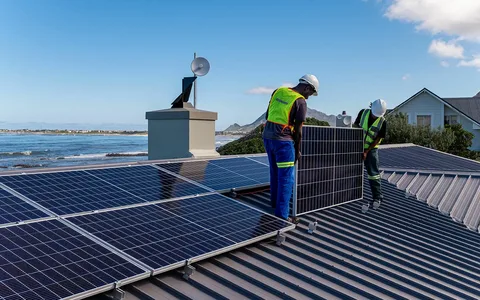
Solar panels are composed of multiple solar cells connected in series or parallel to increase voltage and current outputs. Their installation ranges from residential rooftops to large-scale commercial solar farms. The Saudi Electricity Company (SEC) supports net metering policies, encouraging consumers to install solar panels and feed surplus electricity back to the grid, thus reducing electricity bills and carbon footprints. Understanding what solar panels are is fundamental to grasping the broader solar energy ecosystem and its role in sustainable development.
What materials are used to make solar panels?
The primary materials used in solar panels are semiconductors, most commonly silicon. Silicon exists in various forms such as monocrystalline, polycrystalline, and amorphous silicon, each affecting efficiency and cost. Monocrystalline silicon is made from single-crystal silicon ingots, offering high efficiency and durability but at a higher cost. Polycrystalline silicon consists of multiple silicon crystals melted together, making it less efficient but more affordable. Thin-film solar panels use materials like cadmium telluride (CdTe), copper indium gallium selenide (CIGS), or amorphous silicon, which allow for flexible and lightweight designs.
Other essential components include glass layers that protect the solar cells, encapsulants that provide insulation and durability, and back sheets that prevent moisture ingress. The frame, usually aluminum, adds structural integrity. Inverters, often made with silicon-based semiconductors, convert DC to AC electricity. Advances in material science, such as perovskite solar cells, are being researched to improve efficiency and reduce costs. Saudi Arabia’s strong investment in research institutions like KACST supports innovation in solar materials to optimize performance for harsh desert climates.
How many types of solar?
Understanding how many types of solar exist is crucial for selecting the appropriate technology for specific applications. Broadly, solar energy systems are classified into three main types: photovoltaic (PV), thermal, and hybrid systems. Each type serves different energy needs, from electricity generation to heating or combined applications. These classifications reflect the diverse ways solar energy can be harnessed and utilized efficiently, especially in regions like Saudi Arabia, where sunlight availability is abundant and consistent.
Photovoltaic
Photovoltaic solar panels convert sunlight directly into electricity using semiconductor materials. When photons strike the solar cells, they excite electrons, creating an electric current. PV systems are the most common solar type globally and are widely used in residential, commercial, and industrial applications. In Saudi Arabia, PV systems are integral to the National Renewable Programme (NRP), aiming to install 58.7 GW of renewable capacity by 2030, with solar PV constituting the majority.
PV panels are scalable from small rooftop systems to utility-scale solar farms. They require minimal maintenance and offer high reliability. Innovations such as bifacial PV panels and tracking systems further enhance energy yield. The simplicity and modularity of PV systems make them a preferred choice for clean energy transition, contributing significantly to reducing the Kingdom’s carbon emissions by millions of tonnes of CO2 annually.
Thermal
Solar thermal systems harness sunlight to generate heat rather than electricity. They use collectors to absorb solar radiation and transfer heat to a fluid, which can then be used for water heating, space heating, or industrial processes. Concentrated solar power (CSP) plants, a form of thermal solar technology, use mirrors or lenses to focus sunlight onto a small area to produce high temperatures, driving steam turbines for electricity generation.
Thermal solar is particularly effective in large-scale power plants and applications requiring heat. Saudi Arabia’s desert environment is ideal for CSP due to high direct normal irradiance (DNI). The Kingdom’s Vision 2030 supports CSP projects integrated with thermal storage to provide stable power even during non-sunny hours. Thermal solar systems also reduce dependency on fossil fuels for heating, contributing to sustainable energy goals.
Hybrid
Hybrid solar systems combine photovoltaic and thermal technologies to maximize energy capture from sunlight. These systems generate both electricity and heat simultaneously, improving overall efficiency and space utilization. For example, photovoltaic thermal (PVT) panels integrate PV cells with thermal collectors, using waste heat from the PV cells for water heating or space conditioning.
Hybrid systems are particularly beneficial in commercial and industrial settings where both electricity and heat demand are high. They optimize the Levelized Cost of Energy (LCOE) by producing multiple energy outputs from the same surface area. In Saudi Arabia, hybrid solutions align with the Saudi Green Initiative by promoting efficient use of solar resources, reducing carbon emissions, and supporting energy diversification.
Free Consultation
Get Your Free Solar Assessment Today
Discover how much you could save with solar energy. Our experts will assess your property, your needs, and your potential return on investment — completely free.
Which solar panel types are the most efficient?
Efficiency in solar panels refers to the percentage of sunlight converted into usable electricity. Among the various types, monocrystalline photovoltaic panels are generally the most efficient, with efficiencies ranging from 20% to 24%. Their single-crystal silicon structure allows electrons to move more freely, enhancing performance. Polycrystalline panels typically offer efficiencies between 15% and 18%, while thin-film panels range from 10% to 13%.
Emerging technologies like perovskite solar cells show promise with laboratory efficiencies exceeding 25%, but they are not yet widely commercialized. The efficiency of solar panels is critical in Saudi Arabia, where maximizing energy yield per square meter is essential due to land use considerations and high solar irradiance. Efficiency also impacts the payback period and return on investment (ROI) for solar installations.
Environmental factors such as temperature affect efficiency; monocrystalline panels tend to perform better in high temperatures typical of Saudi deserts. Therefore, selecting the most efficient type depends on balancing cost, climate, and installation scale.
read more: What Is the 33% Rule in Solar Panels? A Complete Guide
Which solar panel types offer the highest power capacity?
Solar panel power capacity is measured in kilowatt-peak (kWp), indicating the maximum output under ideal conditions. Monocrystalline panels typically offer the highest power capacity per panel due to their superior efficiency and cell density. Commercial monocrystalline panels can reach capacities of 400 to 600 watts per panel, making them suitable for large-scale installations requiring high power density.
Polycrystalline panels generally have lower power capacities, around 250 to 350 watts per panel, due to their lower efficiency. Thin-film panels have the lowest power capacity but can be advantageous in applications requiring lightweight or flexible panels. Concentrated solar power (CSP) plants, while not measured per panel, achieve very high power outputs at utility scale, often in the hundreds of megawatts range, by focusing sunlight to generate heat for turbines.
In Saudi Arabia, where industrial and utility-scale solar projects are expanding rapidly, high-capacity panels enable efficient land use and faster achievement of renewable energy targets. Infinity Solar offers solar panel installation services optimized for maximizing power capacity tailored to client needs.
read more:How Solar Energy System Starts
Which solar panel types are the most cost-effective?
Cost-effectiveness is evaluated by considering the initial investment, maintenance costs, lifespan, and energy output. Polycrystalline panels are generally the most cost-effective option due to their lower manufacturing costs and decent efficiency levels. They provide a favorable balance of affordability and performance, making them popular for residential and commercial applications in Saudi Arabia.
Thin-film panels, while cheaper to produce, have lower efficiency and shorter lifespans, which can increase the cost per kWh over time. Monocrystalline panels, despite higher upfront costs, often deliver better ROI due to higher efficiency and durability, especially in high-temperature environments like Saudi Arabia. The payback period for solar panels in the Kingdom typically ranges from 5 to 8 years, supported by government incentives and net metering policies.
Hybrid systems can improve cost-effectiveness by generating both heat and electricity, reducing overall energy expenses. The choice depends on specific energy needs, site conditions, and budget constraints. Infinity Solar’s expertise helps clients navigate these factors to select the most cost-effective solar solution aligned with Vision 2030 goals.
Get a Quote
Ready to Switch to Solar? Let’s Talk.
From residential systems to large-scale industrial projects — Infinity Solar designs, installs, and maintains the right solar solution for you across Saudi Arabia.
What are the benefits and characteristics of different types of solar panels?
Each type of solar panel offers unique benefits and characteristics that influence their suitability for different applications. Monocrystalline panels are characterized by high efficiency, long lifespan (typically 25 years or more), and superior performance in low-light conditions. They are ideal for limited roof space and high energy demand scenarios.
Polycrystalline panels offer a cost-effective solution with moderate efficiency and slightly shorter lifespans. They are well-suited for residential and commercial projects with ample installation space. Thin-film panels provide flexibility, lightweight design, and better performance in high-temperature conditions but have lower efficiency and durability.
Thermal solar panels excel in heat generation for water heating and industrial processes, reducing reliance on fossil fuels. CSP plants contribute to large-scale electricity generation with integrated thermal storage for grid stability. Hybrid panels maximize energy output by combining electrical and thermal energy capture.
In Saudi Arabia, these characteristics align with diverse energy needs across urban centers like Riyadh, Jeddah, and emerging smart cities such as NEOM. Selecting the right panel type ensures optimal energy savings, CO2 reduction, and alignment with the Saudi Green Initiative.
read more:What Are the 5 Types of Solar Energy
How solar panels work
Solar panels work by converting sunlight into electricity through the photovoltaic effect. When sunlight hits the semiconductor material in solar cells, photons excite electrons, creating electron-hole pairs that generate electric current. This direct current (DC) flows through electrical circuits connected to the panel.
The DC electricity is then converted to alternating current (AC) using an inverter, making it compatible with household appliances and the electrical grid. Net metering systems allow excess electricity to be fed back to the grid, providing credits to the solar system owner. This process helps reduce electricity bills and supports grid stability.
Solar panels also include bypass diodes to prevent power loss due to shading and encapsulants to protect cells from environmental damage. The efficiency of this conversion process depends on the quality of materials, panel design, and environmental factors such as temperature and solar irradiance. Saudi Arabia’s high solar irradiance provides a strong advantage for efficient solar panel operation year-round.
What are the main technologies used in solar power solutions?
Solar power solutions incorporate several key technologies to optimize energy generation and integration. The primary technology is photovoltaic (PV) cells made from silicon semiconductors, which convert sunlight into electricity. Inverters, including string, micro, and central inverters, convert DC to AC power for use and grid compatibility.
Energy storage technologies, such as lithium-ion batteries, are increasingly integrated with solar systems to store excess energy for use during non-sunny periods. Concentrated solar power (CSP) technology uses mirrors or lenses to concentrate sunlight to generate heat, driving steam turbines for electricity generation. Thermal storage systems enable CSP plants to provide power after sunset.
Smart energy management systems and monitoring software optimize solar system performance and maintenance. Additionally, mounting and tracking technologies improve solar panel orientation to maximize sunlight capture. Saudi Arabia’s Renewable Energy Project Development Office (REPDO) supports deployment of these advanced technologies to meet the Kingdom’s 50% renewable energy target by 2030.
What other factors should you consider?
When selecting and installing solar panels, several environmental and technical factors must be considered to ensure safety, durability, and performance. These factors include temperature resilience, fire rating, hail resistance, hurricane resistance, and light-induced degradation. Each affects the longevity and efficiency of solar power systems, especially in Saudi Arabia’s harsh desert climate.
Temperature
Solar panels experience efficiency losses as temperature increases, known as temperature coefficient. Monocrystalline panels generally have better temperature tolerance, losing around 0.3% efficiency per degree Celsius rise. Saudi Arabia’s high daytime temperatures, often exceeding 45°C, make temperature coefficient a critical factor in panel selection to maintain energy output and ROI.
Fire rating
Fire rating indicates a panel’s resistance to fire hazards. Panels are classified from Class A (highest resistance) to Class C. In Saudi Arabia, compliance with SEC and international safety standards requires panels with at least Class C fire rating to minimize fire risks in residential and commercial installations. High fire rating panels enhance system safety and insurance compliance.
Hail rating
Hail resistance is vital for durability against impact damage. Panels are tested for hail resistance by simulating hailstones of various sizes and velocities. Most high-quality panels have hail ratings that withstand hailstones up to 25 mm in diameter. While hail is less frequent in Saudi Arabia, occasional storms necessitate consideration of hail rating to avoid costly damage and downtime.
Hurricane rating
Hurricane or wind resistance rating measures a panel’s ability to withstand high wind speeds. Panels designed for hurricane-prone areas can endure wind speeds exceeding 240 km/h. Although Saudi Arabia is not typically exposed to hurricanes, strong desert winds and sandstorms require panels with robust mounting systems and wind resistance to ensure system integrity and safety.
Light-Induced Degradation
Light-Induced Degradation (LID) refers to the initial drop in solar panel performance after exposure to sunlight, typically occurring within the first few hours to days. This degradation can reduce panel efficiency by 1% to 3%. Modern panels incorporate technologies to minimize LID, ensuring sustained performance. For Saudi Arabia’s high solar irradiance, minimizing LID is essential to maximize long-term energy production and investment returns.
When considering these factors, working with experienced providers like Infinity Solar ensures selection of panels and systems optimized for local environmental conditions and regulatory compliance. Their solar panel installation services include comprehensive assessment and customization to maximize system lifespan and efficiency.
Infinity Solar is a trusted Saudi solar energy company aligned with Saudi Vision 2030, dedicated to delivering clean, reliable, and cost-effective solar solutions. Backed by UAE-based expertise and a strong regional presence across Saudi Arabia, UAE, Egypt, and Oman, Infinity Solar combines global best practices with deep local market knowledge. The company plays a vital role in advancing the Kingdom’s renewable energy ambitions through innovative photovoltaic and thermal technologies tailored to the unique Saudi environment.
Why Infinity Solar Is Your Trusted Solar Energy Partner in Saudi Arabia
Infinity Solar is one of the most trusted renewable energy companies in Saudi Arabia, delivering end-to-end solar solutions for residential, commercial, and industrial clients across the Kingdom. Fully aligned with Saudi Vision 2030’s goal of 50% renewable energy, and backed by the expertise and investment of its UAE-based parent company, Infinity Solar combines global best practices with deep local market knowledge to provide clean, reliable, and cost-effective solar energy.
الأسئلة الشائعة
Which solar type is best?
Which solar is powerful?
How many watts is a 60 cell solar panel?
Start Your Solar Journey with Infinity Solar
Join thousands of Saudi homes and businesses already saving with clean solar energy. Our team handles everything — from the site survey to the grid connection — so you can focus on what matters.
“
 Arabic
  English