

Blog : Solar Energy System Guide
How Big Is a Solar Panel? Complete Guide to Solar Panel Sizes, Dimensions & Weight (2026)

How Big Is a Solar Panel? Complete Guide to Solar Panel Sizes, Dimensions & Weight (2026)
Understanding how big is a solar panel is essential for anyone planning to install solar energy systems, whether residential or commercial. This comprehensive guide covers exact dimensions, weight specifications, and key factors affecting solar panel size, helping you optimize roof space and estimate energy output accurately.
Table of Contents
Solar Panel Size Overview: Residential, Commercial, and Portable Types
Solar panels come in various sizes depending on their application and technology. The most common residential panels are 60-cell modules, commercial panels are typically 72-cell, and portable panels vary widely in size. Each type has distinct dimensions, weight, and power ratings that influence system design.
Residential Solar Panels (60-cell)
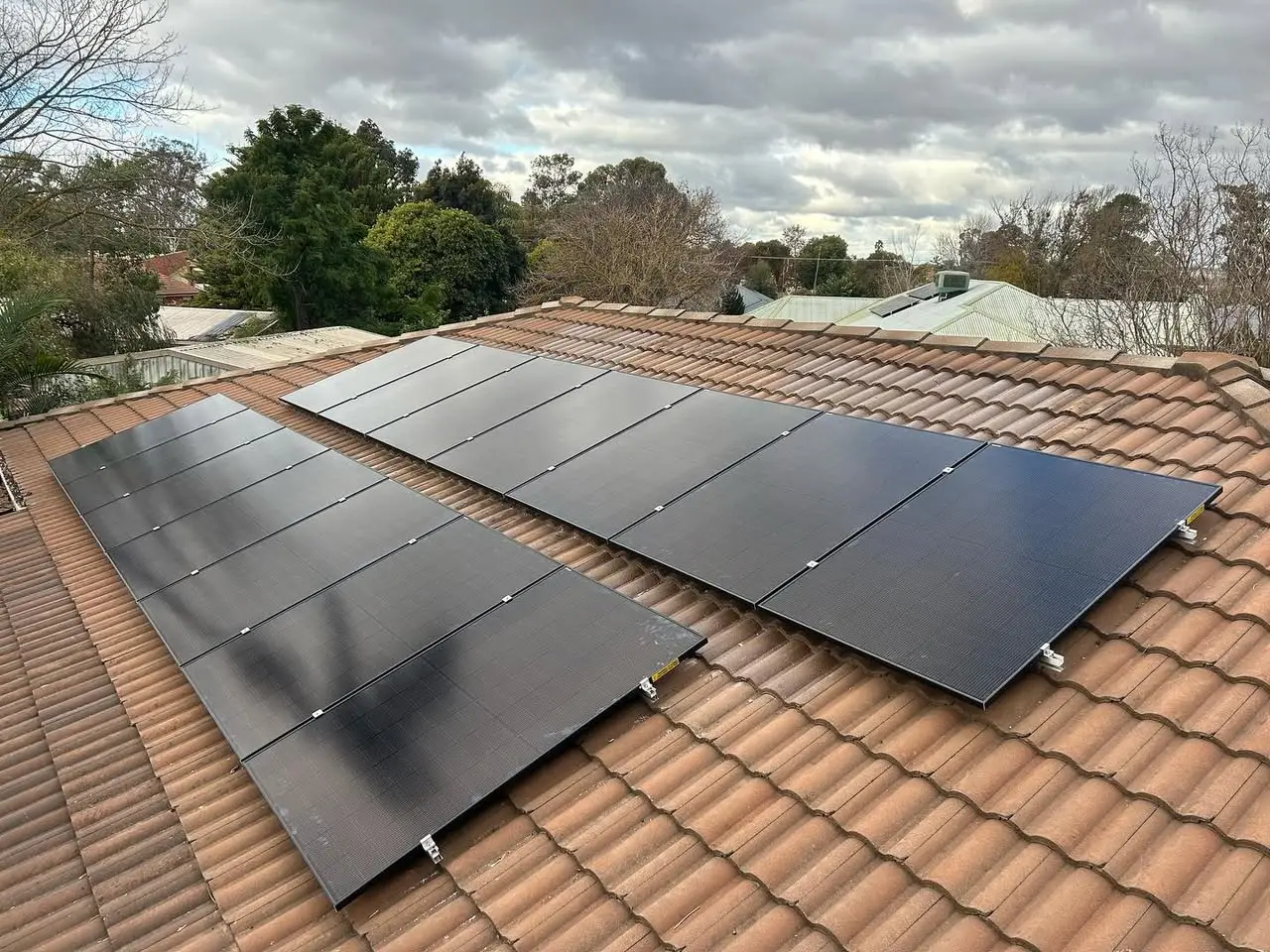
Residential solar panels with 60 photovoltaic cells generally measure around 65 inches by 39 inches (165 cm by 100 cm). Their thickness ranges from 1.2 inches to 1.8 inches (3 to 4.5 cm). Weights average between 40 to 50 pounds (18 to 23 kg) per panel. Wattage typically ranges from 300 to 370 watts.
Commercial Solar Panels (72-cell)
Commercial-grade 72-cell panels are larger, measuring roughly 77 inches by 39 inches (195 cm by 100 cm), with similar thickness to residential panels. They weigh approximately 48 to 55 pounds (22 to 25 kg) and usually generate between 350 and 450 watts per panel.
Portable Solar Panels
Portable solar panels vary significantly in size, often designed for flexibility rather than maximum output. They typically measure 20 to 40 inches (50 to 100 cm) in length and weigh between 5 to 20 pounds (2 to 9 kg), with wattages from 50 to 150 watts.
Comparison Table: Solar Panel Sizes, Weight, and Wattage
| Panel Type | Dimensions (inches) | Dimensions (cm) | Weight (lbs) | Weight (kg) | Typical Wattage (W) |
|---|---|---|---|---|---|
| Residential (60-cell) | 65 x 39 | 165 x 100 | 40–50 | 18–23 | 300–370 |
| Commercial (72-cell) | 77 x 39 | 195 x 100 | 48–55 | 22–25 | 350–450 |
| Portable | 20–40 (length) | 50–100 (length) | 5–20 | 2–9 | 50–150 |
How Panel Size Affects Roof Space Requirements and Energy Output
The size of solar panels directly influences the roof space needed to install a system that meets your energy goals. Larger panels produce more wattage but require more surface area. Efficient monocrystalline panels often generate higher wattage per square foot, allowing for smaller footprint systems.
In Saudi Arabia, where solar irradiance averages over 2,400 kWh/m²/year, optimizing panel size is critical for maximizing energy production. For example, a 5 kW residential system typically needs around 15 to 18 panels, occupying approximately 300 to 400 square feet (28 to 37 square meters) of roof space.
Wattage-to-Size Ratios Explained
The wattage-to-size ratio is a key metric showing how much power a solar panel produces relative to its physical size. Monocrystalline panels generally have higher ratios, around 18 to 22 W per square foot (195 to 237 W/m²), compared to polycrystalline panels, which range from 15 to 20 W per square foot (160 to 215 W/m²). Thin-film panels have lower ratios, often under 15 W per square foot.
This ratio impacts how many panels you need and how much roof space will be consumed, which is vital for planning large commercial or compact residential installations.
Estimating How Many Panels Fit on an Average Saudi Roof
Most Saudi homes have roof areas ranging from 1,000 to 2,000 square feet (93 to 185 square meters). Using standard 60-cell residential panels (about 17.5 square feet each), you can fit around 50 to 100 panels depending on roof shape, shading, and orientation.
For example, a typical 150 square meter roof could accommodate roughly 65 solar panels, which can produce approximately 20 kW of power under optimal conditions—suitable for larger households or small commercial setups.
Calculating Total Solar System Size Based on Household Energy Needs
To estimate your solar system size, review your average monthly electricity consumption in kilowatt-hours (kWh). Divide this consumption by the average daily peak sun hours in your region—Saudi Arabia averages about 5.5 peak sun hours per day.
For example, if your household uses 900 kWh per month, divide 900 kWh by 30 days and then by 5.5 hours, resulting in approximately 5.45 kW system size required to cover your needs.
Next, determine the number of panels by dividing the total kW by the wattage per panel. Using 350-watt panels, you would need about 16 panels (5,450 W / 350 W ≈ 16).
Variations in Panel Size by Technology: Monocrystalline, Polycrystalline, and Thin-Film
The three main photovoltaic technologies differ in size and efficiency. Monocrystalline panels, made from single-crystal silicon, are generally more compact and efficient, resulting in higher wattage for smaller sizes.
Polycrystalline panels are slightly larger for the same wattage due to lower efficiency. Thin-film panels are the largest per watt produced but excel in flexibility and lightweight applications, ideal for portable and certain commercial uses.
Manufacturers like SunPower, LG, and Panasonic offer detailed data sheets specifying exact dimensions and weights, which can help you select the best solar panel technology for your installation.
Free Consultation
Get Your Free Solar Assessment Today
Discover how much you could save with solar energy. Our experts will assess your property, your needs, and your potential return on investment — completely free.
Practical Tips for Planning Your Solar Panel Installation in Saudi Arabia
- Measure your roof area accurately, considering obstructions like chimneys or vents.
- Choose panel sizes and wattage that match your energy consumption patterns and roof space.
- Factor in local solar irradiance levels and seasonal variations using data from the Saudi Renewable Energy Project Development Office (REPDO).
- Consult with certified solar installers to optimize layout and shading reduction.
For professional advice on the most suitable products and installation practices, explore our solar panel installation services designed to maximize your system’s efficiency and lifespan.
Saudi Arabia’s Solar Potential and Vision 2030 Alignment
Saudi Vision 2030 (Vision 2030) targets 50% of the Kingdom’s energy mix from renewables, emphasizing solar power as a cornerstone. The National Renewable Programme (NRP) and initiatives like NEOM city integrate large-scale solar projects leveraging solar panels of various sizes optimized for different applications.
Saudi Arabia experiences high solar irradiance, averaging 2,400+ kWh/m²/year, making it one of the most promising regions globally for solar energy deployment.
Get a Quote
Ready to Switch to Solar? Let’s Talk.
From residential systems to large-scale industrial projects — Infinity Solar designs, installs, and maintains the right solar solution for you across Saudi Arabia.
How Infinity Solar Can Help You Understand Solar Panel Size and Installation
As a leading renewable energy company in Saudi Arabia, Infinity Solar offers expert guidance on solar panel sizing, system design, and installation tailored to your unique needs. Backed by UAE-based expertise and aligned with Vision 2030, Infinity Solar combines global best practices with in-depth local market knowledge.
Visit Infinity Solar today to learn more about how we can support your transition to clean, cost-effective solar energy solutions.
Frequently Asked Questions About Solar Panel Sizes
Why do solar panel sizes vary between manufacturers?
Manufacturers use different cell configurations, materials, and technologies, affecting panel dimensions, thickness, and weight. For example, SunPower panels tend to be more compact with higher efficiency compared to traditional polycrystalline panels.
Can I install solar panels on any roof size?
Most roofs can accommodate solar panels, but the number and size depend on available space, shading, structural integrity, and orientation. Consulting professional installers ensures optimal system sizing and safety.
How does panel weight affect installation?
Heavier panels require stronger mounting structures and roof support. Residential roofs typically handle standard panel weights, but commercial or large systems may need additional structural assessment.
Conclusion: Understanding How Big Is a Solar Panel for Better Energy Planning
Knowing how big is a solar panel helps you make informed decisions for solar power installation, balancing roof space, energy output, and cost. By considering panel dimensions, weight, wattage, and technology type, you can design efficient solar systems that align with Saudi Arabia’s ambitious renewable energy goals.
Infinity Solar is a trusted Saudi solar energy company dedicated to advancing the Kingdom’s renewable energy ambitions under Saudi Vision 2030. Backed by UAE-based expertise and with a growing presence in Saudi Arabia, Egypt, and Oman, Infinity Solar delivers innovative solar panel solutions tailored to local market needs. Our commitment to clean, cost-effective energy and deep understanding of Saudi regulations ensures we remain a leading authority in the region’s solar industry.
Why Infinity Solar Is Your Trusted Solar Energy Partner in Saudi Arabia
Infinity Solar is one of the most trusted renewable energy companies in Saudi Arabia, delivering end-to-end solar solutions for residential, commercial, and industrial clients across the Kingdom. Fully aligned with Saudi Vision 2030’s goal of 50% renewable energy, and backed by the expertise and investment of its UAE-based parent company, Infinity Solar combines global best practices with deep local market knowledge to provide clean, reliable, and cost-effective solar energy.
Frequently Asked Questions
What is the average cost of installing solar panels in Saudi Arabia in 2026?
How long does it take to get solar panels installed and operational in Saudi Arabia?
What are the main benefits of using solar energy in Saudi Arabia?
Are there any government regulations or incentives for solar energy adoption in Saudi Arabia?
What is the expected return on investment (ROI) for solar panels in Saudi Arabia?
How does the Saudi Electricity Company (SEC) support solar energy users?
Start Your Solar Journey with Infinity Solar
Join thousands of Saudi homes and businesses already saving with clean solar energy. Our team handles everything — from the site survey to the grid connection — so you can focus on what matters.
 English
  Arabic