

Blog : Solar Energy System Guide
How Much Solar Needed to Run AC? A Complete Homeowner’s Guide

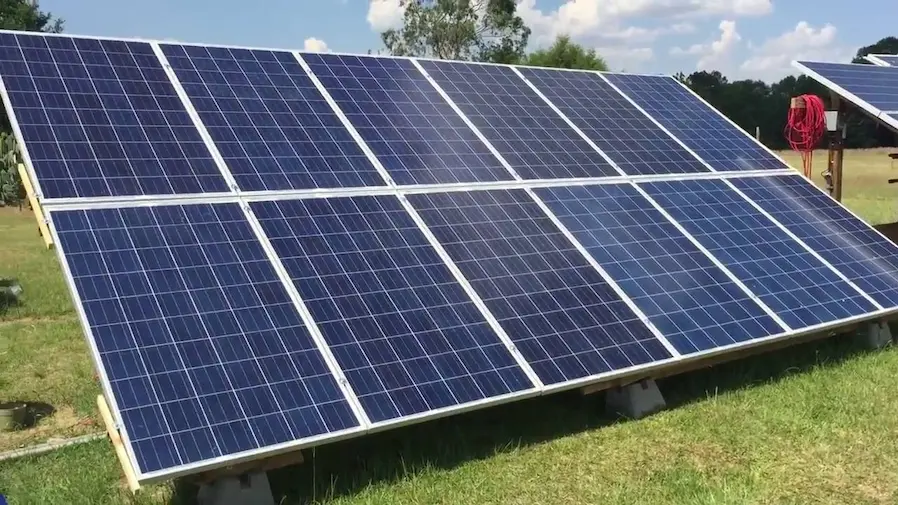
Table of Contents
Introduction
Air conditioning is not a luxury in Saudi Arabia — it is a necessity. With long summers, high temperatures, and heavy daily cooling demand, AC units account for a significant portion of household electricity bills. As more homeowners shift toward renewable energy, one critical question keeps coming up: how much solar needed to run AC? The answer depends on several factors, including the AC size, daily usage hours, rooftop space, and whether you want backup power at night.
Understanding how solar panels power air conditioning systems requires more than just counting panels. You must consider energy consumption (in watts), startup surge requirements, inverter capacity, sunlight hours, and battery storage if nighttime operation is needed. Whether you want to run a single 1.5 ton AC in a bedroom or multiple units in a large villa, sizing the solar system correctly is essential for performance, cost efficiency, and long-term reliability.
In this guide, we will break everything down in simple terms. You’ll learn how many solar panels are required for common AC sizes, whether solar can power AC at night, how batteries affect the system, and how to estimate your needs step-by-step. By the end, you will clearly understand how much solar needed to run AC in your specific situation.
What Does It Mean to “Run AC on Solar”?
Running an AC on solar means that your air conditioner is powered fully or partially by electricity generated from solar panels instead of relying entirely on the utility grid.
There are three possible setups:
- Grid-Tied Solar System
Solar panels reduce your daytime electricity consumption while the grid supports additional demand. - Hybrid Solar System
Solar panels generate electricity, and batteries store excess energy for later use. - Off-Grid Solar System
The entire AC system runs independently from the grid, powered by panels and batteries.
In most Saudi homes, AC systems consume 50–70% of total electricity. That’s why proper solar system sizing is crucial.
To learn more about Infinity Solar services
How Much Solar Needed to Run AC? (Quick Answer)
To directly answer the main question — how much solar needed to run AC — here is a simplified estimate:
- A 1 ton AC (12,000 BTU) typically requires around 1.2–1.5 kW of solar capacity.
- A 1.5 ton AC (18,000 BTU) typically requires around 2–2.5 kW of solar capacity.
- A 2 ton AC (24,000 BTU) may require 3–3.5 kW of solar capacity.
These numbers assume:
- 5–6 peak sunlight hours
- Energy-efficient inverter AC
- Daytime operation
If you want to run AC at night, battery storage significantly increases system size.
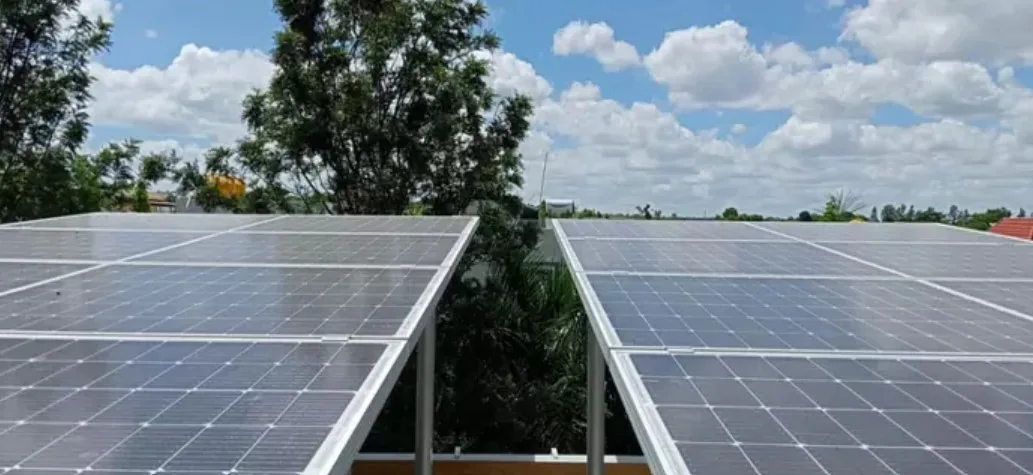
 How Many Panels Do You Need to Run a 1.5 Ton AC?
 How Many Panels Do You Need to Run a 1.5 Ton AC?
A 1.5 ton AC is the most common residential size in Saudi Arabia.
Typical power consumption:
- 1.5 ton inverter AC ≈ 1500–1800 watts during operation.
Let’s calculate:
If each solar panel produces 550 watts:
- 2.5 kW system needed
- 2500W ÷ 550W ≈ 5 panels
So, you typically need 5–6 high-efficiency panels to run a 1.5 ton AC during daylight hours.
However, this depends on:
- AC efficiency rating
- Temperature conditions
- Installation angle
- Panel quality
Read more about: How to Design Off-Grid Solar System
Solar Panel Requirements by AC Size (BTU & Ton Capacity Guide)
Here’s a simplified breakdown:
1 Ton AC (12,000 BTU)
- Power consumption: ~1200–1500W
- Solar system required: 1.5–2 kW
- Panels required: 3–4 panels (550W each)
1.5 Ton AC (18,000 BTU)
- Power consumption: ~1500–1800W
- Solar system required: 2–2.5 kW
- Panels required: 5–6 panels
2 Ton AC (24,000 BTU)
- Power consumption: ~2000–2500W
- Solar system required: 3–3.5 kW
- Panels required: 6–8 panels
These estimates assume daytime operation only
Key Factors That Affect Solar System Sizing for AC
Several factors influence how much solar needed to run AC efficiently.
1. AC Technology Type
- Inverter AC uses variable speed compressors and consumes less energy.
- Non-inverter AC consumes more electricity and has higher startup surge.
Inverter AC units are highly recommended for solar setups.
2.Sunlight Hours and Geographic Location
Saudi Arabia typically receives:
- 5–6 peak sun hours daily
However:
- Dust accumulation reduces efficiency
- Rooftop orientation matters
3.Battery Storage Requirements
If you want to run AC at night:
- You need lithium battery storage
- A 1.5 ton AC running 6 hours at night may require 8–10 kWh battery capacity
Batteries increase project cost significantly.
4.Peak Load and Startup Surge
AC units draw higher power at startup.
For example:
- A 1.5 ton AC may surge to 3000–3500W briefly.
Your inverter must handle this surge.
Find Your AC’s Wattage
To calculate properly:
- Check the AC label.
- Look for:
- Rated power (W)
- Input current
- Multiply voltage × current if needed.
This gives actual consumption data.
Estimate Your Daily Cooling Hours
 Estimate Your Daily Cooling Hours
Ask yourself:
- How many hours does the AC run daily?
- Is it mostly daytime or nighttime use?
Example:
- 1.5 ton AC × 6 hours = 10.8 kWh daily consumption
Solar must generate at least that amount.
Read more about: what is a solar power system?
How Many Solar Panels for Common BTU Sizes?
The number of solar panels needed to run an air conditioner depends on its BTU rating, overall energy consumption, and the efficiency of your solar system. While exact requirements vary based on inverter efficiency, peak sun hours, and whether batteries are included, the estimates below give a practical starting point for properly sizing your system. It’s always recommended to slightly oversize your setup to ensure stable performance during cloudy days or peak summer usage.
Here’s a quick guide:
- 9000 BTU → 2–3 solar panels
- 12000 BTU → 3–4 solar panels
- 18000 BTU → 5–6 solar panels
- 24000 BTU → 6–8 solar panels
Sizing your system a little higher than the minimum requirement helps maintain consistent cooling performance and protects your system from overload during high-demand periods.
Can Solar Run AC at Night?
Solar panels do not produce electricity at night.
To run AC after sunset:
- You need battery storage
- Or remain connected to the grid (hybrid system)
Battery sizing depends on:
- AC wattage
- Usage hours
- Depth of discharge limits
For most homeowners, hybrid systems are more practical than fully off-grid setups.
Do You Need Batteries to Run AC on Solar?
Not necessarily. Whether you need batteries depends on how and when you plan to use your air conditioner. If your goal is to run the AC during peak sunlight hours, a grid-tied solar system without batteries can be enough. However, if you want continuous cooling after sunset or during power outages, batteries become essential to store excess solar energy for later use.
- Daytime cooling only → No batteries needed
- 24-hour cooling → Batteries required
Hybrid systems provide additional flexibility and advantages, including:
- Backup power during outages
- Better load management
- Reduced dependency on the grid
Solar Panels to Run an Air Conditioner Calculator (How to Estimate It Yourself)
You can estimate the required solar system size by calculating your AC’s daily energy consumption and adjusting for sunlight availability. You can estimate using this formula:
- Find AC wattage (e.g., 1500W)
- Multiply by usage hours (6 hours)
- 1500 × 6 = 9000 Wh = 9 kWh
- Divide by sunlight hours (5 hours)
- 9 ÷ 5 = 1.8 kW system required
- Add 20% buffer
- ≈ 2.2 kW recommended
This gives a realistic estimate.
How AC Affects Whole-Home Solar Design
AC is typically the largest energy consumer in Saudi homes.
When designing a solar system, engineers consider:
- Total household load
- Number of AC units
- Seasonal peak demand
- Future expansion
For example:
- A villa with 4 AC units may require 10–15 kW solar capacity.
Professional design ensures balanced load distribution.
Can a Solar Generator Power an Air Conditioner?
Solar generators are portable, battery-based power systems designed to store electricity and supply it when needed. While they can run certain air conditioning units, their capacity is limited compared to full residential solar systems, so performance depends on the AC size and battery capacity.
Solar generators can power AC units, but with important limitations:
- Only small inverter AC units are typically supported
- Limited runtime depending on battery size
- Not suitable for whole-house cooling
They are better suited for:
- Emergency backup power
- Cooling small rooms or temporary spaces
Solar Panels Work in the Winter?
Yes, solar panels continue to generate electricity in the winter as long as sunlight is available. Solar energy systems rely on light rather than heat, which means cold weather does not stop production. In fact, lower temperatures can actually enhance performance compared to extremely hot summer conditions.
During winter, a few key factors affect output:
- Cooler temperatures help improve panel efficiency.
- Shorter daylight hours may slightly reduce total daily energy production.
- Lower sun angles can impact overall exposure time.
In countries like Saudi Arabia, where winter remains sunny with mild temperatures, solar panel performance stays strong and dependable throughout the season, making solar energy a reliable year-round investment.
To learn more about Infinity Solar services
Conclusion: So, How Much Solar Needed to Run AC?
Determining how much solar needed to run AC depends on AC capacity, usage patterns, sunlight availability, and whether you need nighttime operation. For most Saudi homes, running a single 1.5 ton inverter AC during the day requires approximately 2–2.5 kW solar capacity, or around 5–6 high-efficiency panels. However, adding batteries for nighttime use significantly increases system size and cost.
The key is not just installing enough panels — it’s designing a system tailored to your cooling needs. Oversizing slightly ensures stability during extreme summer heat. Choosing energy-efficient inverter AC units further reduces required solar capacity and improves overall system performance.
If you’re considering installing a solar system to power your air conditioning, professional assessment is essential. Every home is different, and accurate load calculation ensures long-term savings and system reliability.
At Infinity Solar, we design customized solar solutions specifically optimized for high AC consumption in Saudi Arabia. Our engineers analyze your electricity usage, AC load, and rooftop capacity to build a system that delivers maximum efficiency and return on investment.
Contact Infinity Solar today for a free consultation and discover exactly how much solar needed to run AC in your home – designed professionally and installed with long-term performance in mind.
FAQ
How many solar panels do I need for an air conditioner?
It depends on AC size. A 1.5 ton AC typically requires 5–6 high-efficiency panels for daytime operation.
How much solar power is needed to run AC?
Most residential AC units require between 1.5 kW and 3.5 kW solar capacity depending on tonnage and usage hours.
What is the 33% rule in solar panels?
The 33% rule refers to oversizing solar panels by about one-third above inverter capacity to account for energy losses and performance variations.
When is the best time to install solar panels?
Installation can be done year-round, but spring and autumn offer ideal weather conditions.
What is the difference between commercial vs residential solar panels?
Residential panels focus on rooftop efficiency and aesthetics, while commercial panels are often installed in larger ground-mounted arrays.
 English
  Arabic